One List, Two Worlds: What Crossword Constructors and Red Teamers Learn From Each Other
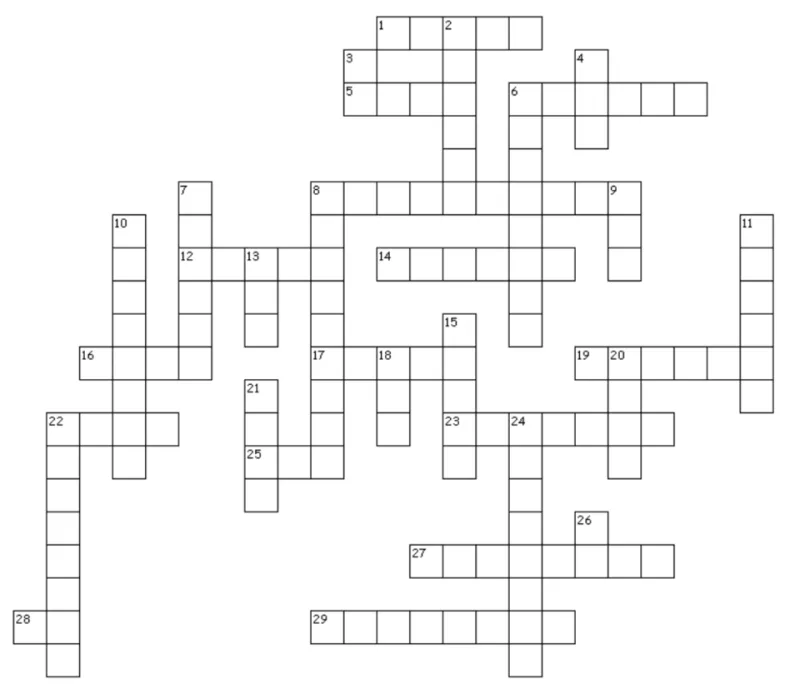
Photo: Barbara (WVS), CC BY-SA 4.0, via Wikimedia Commons
Here's a fun thought experiment: put a crossword constructor and a red teamer in a room and ask them what they do for a living. One designs puzzles for The New York Times. The other breaks into client networks for a living. They'd swear they have nothing in common.
They'd both be wrong. Deep down, both are doing the exact same thing — predicting which words humans are most likely to use, and building lists to prove it.
Frequency Is Everything
The core insight that unites both worlds is simple: not all words are created equal. In English, certain letters and patterns show up way more often than others, and both puzzle people and hackers exploit that ruthlessly.
Crossword constructors live and die by vowel-to-consonant ratios. A grid full of J's and Q's is a construction nightmare, so they lean on words packed with friendly letters — ORE, ETA, ALOE, EEL. Veteran solvers call these "crosswordese," and every constructor has a mental list of the heavy hitters.
Pentesters? Same game, different stakes. When cracking password hashes, you don't throw the entire dictionary at a target. You start with the statistical winners: the most common passwords, the most common base words, the substitutions people actually make (yes, everyone swaps "a" for "@", and yes, that's in every cracking rule set already).
Both groups are running the same math. English letter frequency tells you E, T, A, O dominate; password analysis tells you "password," "letmein," and "qwerty" dominate. Build your list around the fat part of the distribution first.
Patterns Are the Real Superpower
Letter patterns are where things get interesting.
A crossword solver staring at _ _ A _ E runs a pattern match against their mental dictionary: GRACE, STARE, FLAME, CRANE. Constructors deliberately seed grids with common bigrams and trigrams — TH, ING, ENT — because they make filling easier.
Now look at a password cracker working through a masked attack. A mask like ?u?l?l?l?l?d?d?d targets the pattern "one capital, lowercase letters, three digits" — which describes roughly a billion real-world passwords. Same pattern-matching instinct, just weaponized.
If you're generating wordlists with our tool, this matters for both audiences:
- Puzzle folks: filter your output by length, vowel count, and common bigrams to get fill-friendly candidate words fast.
- Security folks: apply masks, leetspeak rules, and common suffix patterns (years, "123", "!") to simulate how people actually build passwords.
Tools of the Trade
The tooling overlap is almost comical. Both crowds rely on:
- Word frequency lists — Google's ngram data and password breach corpora rank words nearly identically at the top.
- Pattern filters — grep-style regex works whether you're hunting seven-letter grid fillers or password structures.
- Combination generators — a constructor mashing prefixes and suffixes for themed fill is doing the same thing as a cracker appending years and special characters.
A practical example: generate a list of common English nouns, then run two pipelines on it. For puzzles, filter to 3–5 letters with high vowel counts. For pen tests, apply mutation rules — capitalize the first letter, append 1980–2025, add a trailing "!". Same seed list, two totally different outcomes.
A Word About Ethics (Seriously)
Here's where the two worlds diverge hard. Crossword answers are meant to be found — that's the whole point. Cracking passwords without explicit, written authorization is a felony in the United States under the Computer Fraud and Abuse Act, full stop.
If you're on the security side of this, use your wordlists only on systems you own or have permission to test. If you're on the puzzle side, congratulations — your hobby is legally bulletproof.
Try This at Home
Want to see the overlap yourself? Build a starter wordlist this weekend:
- Pull a frequency-ranked list of the top 10,000 English words.
- For puzzle practice, filter to words with 60%+ vowels under six letters — instant crosswordese starter kit.
- For security study (on your own test machine), apply common mutation rules and see how many of your own old passwords show up. Mine did, and I'm still a little embarrassed about it.
The takeaway? Whether you're filling a 15x15 grid or auditing a client's Active Directory, you're playing the same prediction game. Build smarter lists, know your patterns, and respect which side of the law your puzzle is on.