Your Phone's Autocomplete Is Secretly the Best Wordlist You've Never Downloaded
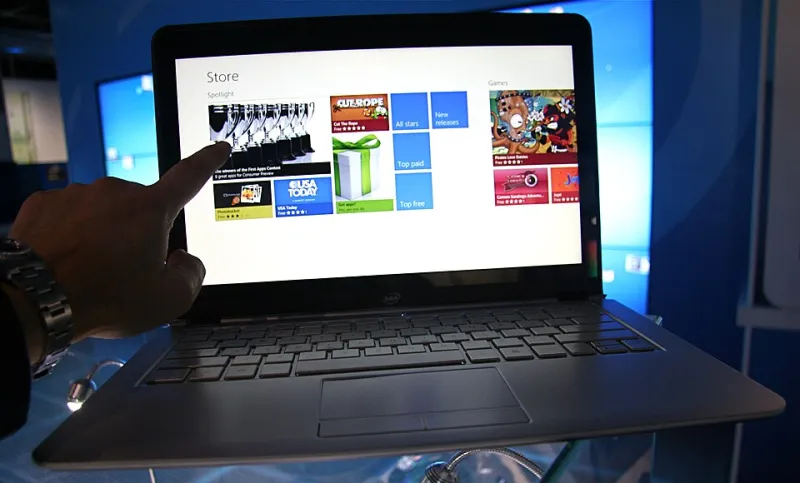
Photo: Intel Free Press, CC BY 2.0, via Wikimedia Commons
There's a wordlist generator sitting in your pocket right now, and you didn't have to build it. Every time your keyboard suggests "tomorrow" before you finish typing "tomo," it's drawing on a statistical model trained on an enormous amount of typing behavior — corrections, swipes, missed keys, the works. That model is essentially a frequency-ranked wordlist with real-world weighting baked in.
For red teamers, puzzle designers, and anyone obsessed with how language actually gets used, that's a fascinating signal. Because here's the thing: the dictionary is not how people type.
Dictionary Order Is a Lie (Sort Of)
Most wordlists start from a dictionary file — /usr/share/dict/words, a Scrabble lexicon, whatever's handy — and then get mangled with rules: capitalization swaps, trailing digits, leetspeak substitutions. That workflow is fine, but it treats every word as equally likely, which they obviously aren't.
Predictive text engines solved this problem years ago, just for a different reason. Their goal is guessing your next word, so they need to know which words dominate real typing. Unsurprisingly, the top of that ranking looks nothing like a dictionary. It's "you," "hey," "omw," "lol," "meeting," "thanks." Function words, names, shorthand, workplace vocabulary. The stuff of actual thumbs on actual screens.
If you're building a wordlist for a password audit, that ordering matters enormously. The words people type casually are, statistically, the words they reach for when a form asks them to invent a phrase. "Hunter2" energy, but at the vocabulary level.
What the Keyboard Knows
Think about what a predictive model implicitly captures:
- Recency and context. Words spike when they're culturally hot. Your keyboard learned a lot of new vocabulary during the pandemic ("quarantini," anyone?) and during any given NFL season.
- Proper nouns. Names of coworkers, kids, cities. Personal dictionaries are full of them, and personal dictionaries are a goldmine for location-aware or target-specific lists.
- Shorthand. "Btw," "idk," "smh" — entries that will never appear in Webster's but show up in credentials constantly.
- Frequency weighting. Not just which words, but how often, which is exactly what you want when prioritizing candidates.
None of this requires actually exfiltrating anyone's keyboard data — please don't. The point is to think the way the keyboard thinks: rank by behavior, not by alphabetization.
Borrowing the Keyboard's Brain for Your Own Lists
So how do you approximate this in your own workflow?
Start with frequency corpora, not dictionaries. Word frequency lists derived from large text collections (movie subtitles, Reddit comments, news archives) approximate typing behavior far better than alphabetical word lists. Subtitle-based corpora in particular capture conversational English — the register people actually write passwords in.
Layer in recency. A frequency list from 2010 doesn't know about the current pop culture moment. Your earlier read of pop culture charts applies here: blend a base frequency list with a fresh slice of trending terms and you get something that behaves like a living predictive engine.
Weight, don't just include. A wordlist where the top 500 entries are ordered by real-world likelihood will beat a flat list of 50 million entries for most practical purposes. This is the same insight behind why your cracker might be slow — it's rarely the hardware, it's the ordering.
Simulate the personal dictionary. For targeted engagements, build small per-target lists: names of family members, pets, sports teams, employers. Your phone does this automatically; you should too.
The Puzzle Side of the Coin
This isn't only a security story. Crossword constructors and puzzle designers face the same problem in reverse: they need to know which words feel common to a solver. Predictive text is a decent proxy for that intuition. If your keyboard finishes a pattern instantly, the word is likely common enough for a mainstream puzzle. If you have to type all seven letters, you've wandered into crosswordese-or-obscure territory.
It's the same pattern-recognition instinct spelling bee champions use — internalized frequency ranking — just outsourced to a chip in your pocket.
Try It Yourself
A quick exercise: type a single letter into your phone and screenshot the three suggestions. Do that for all 26 letters. You now have a rough sketch of the highest-frequency vocabulary in English typing. Compare it to the head of a dictionary-ordered wordlist and notice how little overlaps.
That gap is the whole argument. The best wordlists aren't the biggest ones — they're the ones ordered the way human fingers actually move. Your keyboard figured that out years ago. Maybe it's time your generator caught up.