Dialing for Dollars: Why the Telephone Keypad Is Still a Password Cracker's Best Friend
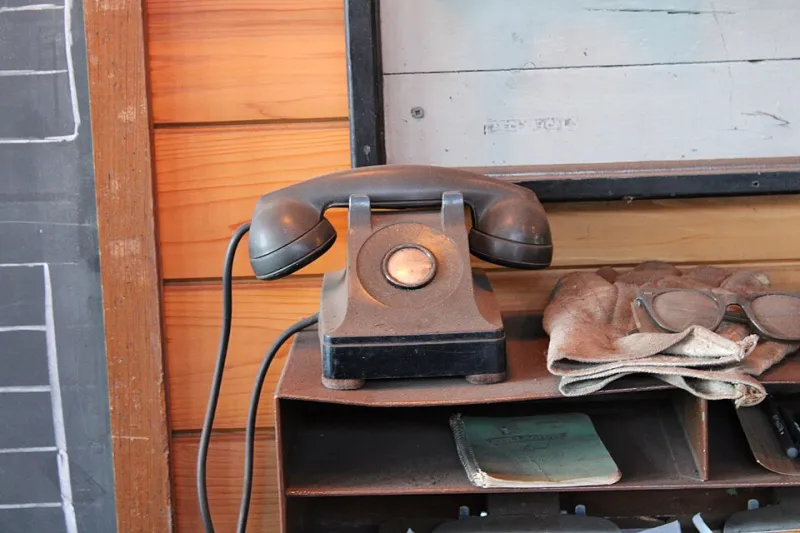
Photo: DogsRNice, CC BY-SA 4.0, via Wikimedia Commons
The Original Human Keyboard
Before anyone typed a password into a phone, they were already typing words into one — sort of. When vanity numbers took off in the 1980s and '90s, American businesses discovered that people remember words better than digits. 1-800-COLLECT. 1-800-FLOWERS. 1-800-MATTRESS (yes, the mattress place that "leaves off the last S for savings"). The telephone keypad became the first mass-market cipher, and tens of millions of people learned it without ever calling it that.
That's a fascinating bit of telecom trivia. It's also a wordlist generator's dream.
Why Keypad Encoding Matters for Security Testing
Here's the thing about mnemonic habits: they don't stay in their lane. A person who spends decades associating FLOWERS with 3569377 doesn't magically forget that mapping when they're asked to create a PIN for their banking app. The same shortcut that made dialing easy makes memorizing numbers easy — and people use it constantly.
Red teams testing systems with phone verification flows, numeric PINs, or account recovery questions should assume some percentage of users have encoded a word into their number. Maybe it's a business line with a vanity number. Maybe it's a personal PIN built from a spouse's name. Either way, a wordlist that includes keypad-encoded entries will outperform a purely random numeric list at the same length.
Building a Keypad-Aware Wordlist
The encoding itself is simple — it's the old ITU E.161 standard:
- ABC → 2
- DEF → 3
- GHI → 4
- JKL → 5
- MNO → 6
- PRS → 7
- TUV → 8
- WXY → 9
(Q and Z historically bounced around, which is a fun edge case if you're being thorough.)
The workflow looks like this:
- Start with a solid wordlist. Names, dictionary words, brand names, local sports teams — whatever fits your target's profile.
- Map each word to its digit string. FLOWERS becomes 3569377, MOM becomes 666, JORDAN becomes 567326.
- Layer in the classics. Append common suffixes (years, 00, 123) to the encoded strings, since people rarely stop at the bare mapping.
- Run both directions. Also decode common number patterns back into words — if your target system shows you a numeric identifier, you can check whether it spells something.
With a generator, this whole pipeline takes seconds. Without one, you're hand-mapping words on a diagram of a phone, which is a special kind of punishment.
Where This Actually Pays Off
A few scenarios where keypad-encoded lists earn their keep:
Business phone verification. Companies that advertise a vanity number often use related words in their security flows — support PINs, account lookups, internal tools. If a company's main line is 1-800-RENT-CAR, that digit string (and the words behind it) belongs in your list.
Numeric PINs. Four-to-six digit PINs are a tiny keyspace to begin with. When you restrict that space to keypad-encoded words plus common number patterns, your hit rate climbs without ballooning your list size.
Legacy systems. Older IVR and voicemail systems were literally designed around keypad input. Passwords and PINs on those systems skew toward what a phone can express — digits, and digits that mean words.
The Mnemonic Trap Cuts Both Ways
There's a defensive lesson here too. If you're a developer, understand that your users are encoding words into numbers whether you told them to or not. A PIN policy that just requires "6 digits" is effectively a wordlist policy — you've just moved the dictionary from letters to digits. Rate limiting, lockouts, and breach-password screening should apply to numeric fields, not just text passwords.
And for the testers: remember that the vanity number habit is regional and generational. A 55-year-old sales executive who lived through the 1-800-COLLECT era is a far better candidate for keypad-encoded guesses than a teenager who's never dialed a number in their life. Context shapes the list, as always.
One List, Two Alphabets
The best wordlists don't just contain words — they contain the transformations people apply to words. Leetspeak, keyboard walks, date suffixes, and now keypad encoding all belong in the same mental toolbox. The telephone keypad is the oldest and most widely-learned word-to-number cipher in American life, and it's sitting there, unpassworded, waiting for you to use it.
Fire up the generator, feed it your wordlist, and let the keypad do the rest. 1-800-YOUR-TEST just got a lot more interesting.